About Jagatsinghpur
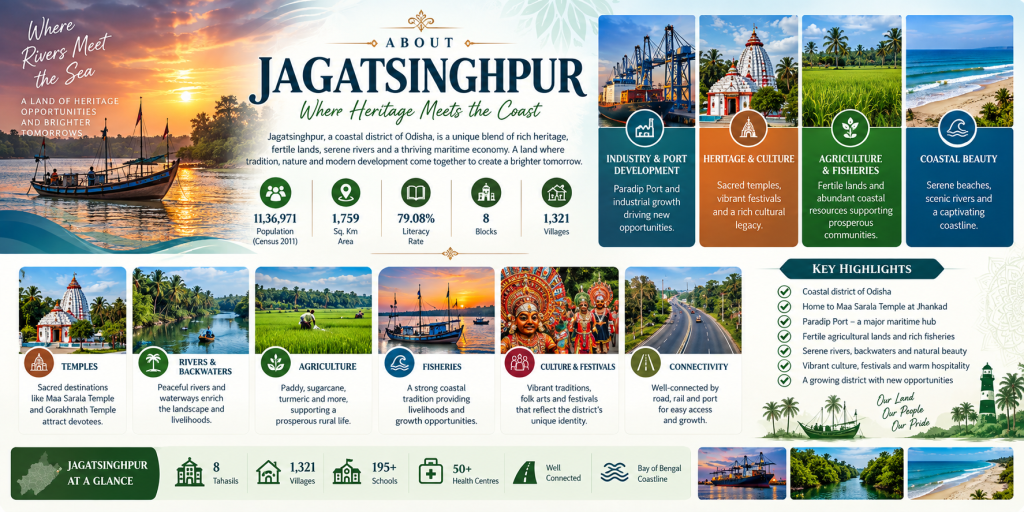
Jagatsinghpur, a prominent coastal district of Odisha, is a unique blend of rich heritage, vibrant culture, fertile agricultural lands, serene rivers, coastal beauty, and modern industrial development. Known for sacred destinations such as Maa Sarala Temple at Jhankad and Gorakhnath Temple, the district reflects deep-rooted spiritual and cultural traditions, while its festivals and folk arts add to its vibrant identity. Agriculture and fisheries remain important sources of livelihood, supported by fertile plains, rivers, waterways, and coastal resources. Paradip Port, one of the region’s major maritime and industrial centres, strengthens Jagatsinghpur’s economy through shipping, trade, logistics, and industrial growth. With improving road and rail connectivity, natural landscapes, cultural landmarks, and growing opportunities, Jagatsinghpur beautifully brings together heritage, nature, agriculture, industry, and progress.
Geography & Location
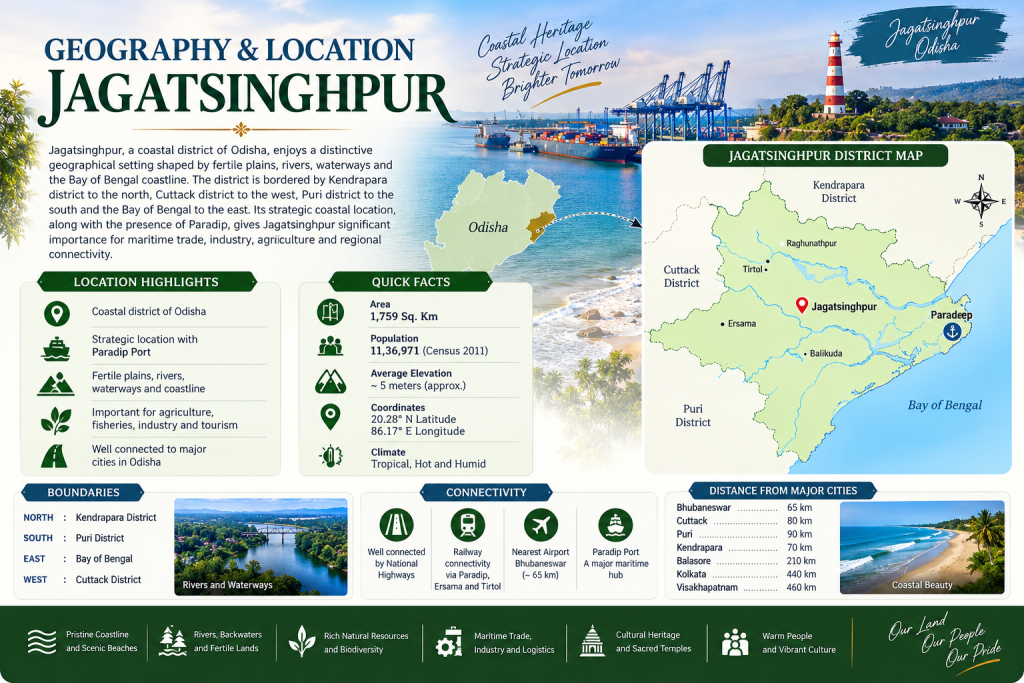
Jagatsinghpur, a coastal district of Odisha, enjoys a distinctive geographical setting shaped by fertile plains, rivers, waterways, agricultural lands, and the Bay of Bengal coastline. The district is bordered by Kendrapara district to the north, Cuttack district to the west, Puri district to the south, and the Bay of Bengal to the east. Its strategic coastal location, along with the presence of Paradip, gives Jagatsinghpur significant importance for maritime trade, industry, agriculture, and regional connectivity.
The district is enriched by several rivers and waterways, including the Mahanadi, Devi, Alaka, Biluakhai, Hansua, and Paika, which support irrigation, agriculture, fisheries, and local livelihoods. Its landscape is characterized by fertile agricultural fields, riverine areas, coastal environments, and green rural settlements. With road and rail connections to major centres such as Bhubaneswar and Cuttack, along with the maritime importance of Paradip Port, Jagatsinghpur continues to develop as a region where natural resources, agriculture, coastal life, and modern industrial growth come together.
Agriculture – The Heart of Jagatsinghpur




Culture and Festivals
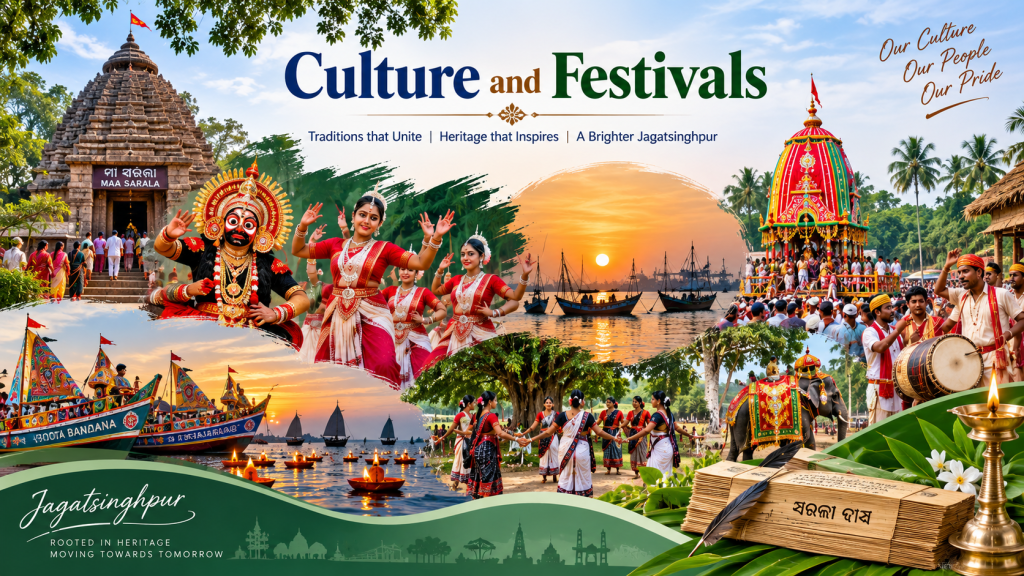
Jagatsinghpur District is known for its rich cultural heritage, religious traditions, folk arts, and vibrant festivals. Traditional forms such as Pala, Daskathia, Kirtan, Bhajan, and Jatra, along with the cultural importance of Maa Sarala Temple at Jhankad, reflect the district’s deep connection with Odisha’s history and traditions.
Major celebrations include Rath Yatra, Raja Parba, Durga Puja, Kali Puja, Dola Purnima, Kartika Purnima, Boita Bandana, and Kalinga Bali Yatra at Paradip. Colourful processions, temple rituals, fairs, music, and cultural performances bring communities together while preserving the unique cultural identity of Jagatsinghpur.
Climate and Seasons
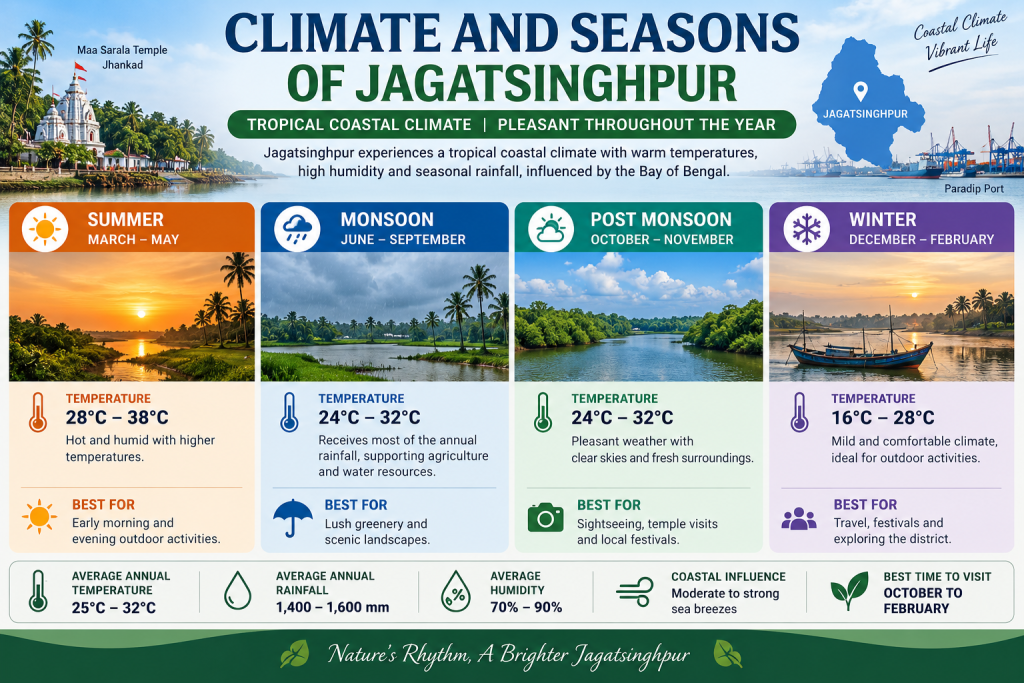
Jagatsinghpur District experiences a tropical coastal climate throughout the year, strongly influenced by the Bay of Bengal. The district has hot and humid summers, a rain-rich monsoon season, pleasant post-monsoon weather, and mild winters. Seasonal rainfall plays an important role in supporting the district’s agriculture, rivers, wetlands, fisheries, and green landscapes, while its coastal location keeps humidity relatively high for much of the year.
The summer season (March–May) is generally hot and humid, while the monsoon season (June–September) brings most of the annual rainfall and transforms the countryside into lush green landscapes. The post-monsoon season (October–November) offers clearer skies and more comfortable weather, making it suitable for sightseeing and cultural activities. During winter (December–February), temperatures become milder and conditions are generally pleasant, making this a favorable period for visiting temples, Paradip, riverside areas, cultural attractions, and other destinations across Jagatsinghpur District.
Transportation in Jagatsinghpur
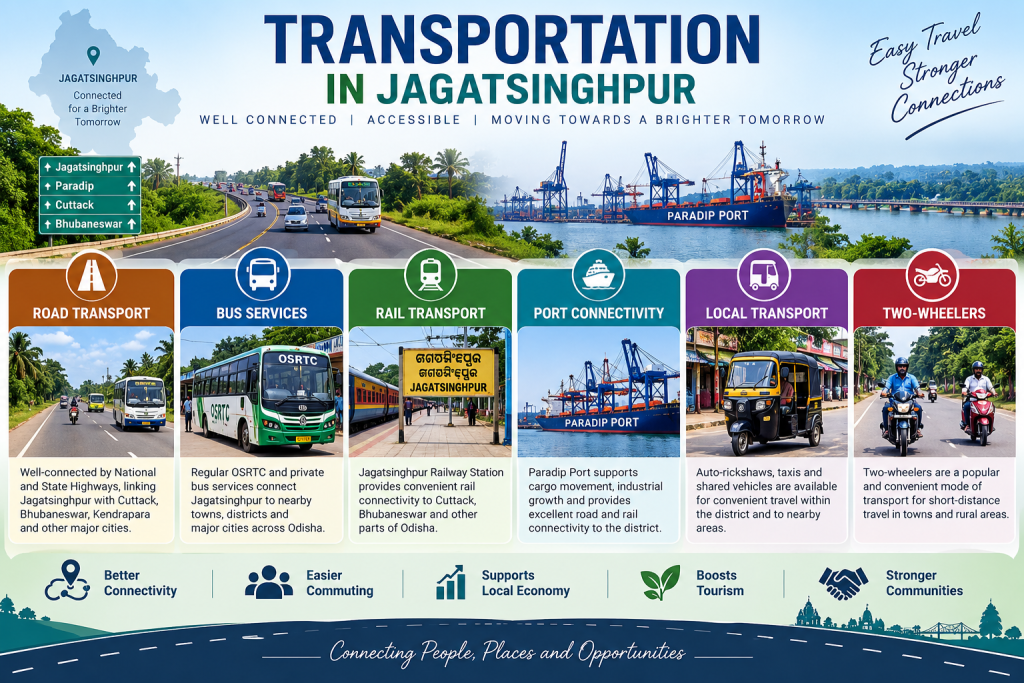
Jagatsinghpur District has a growing transportation network that connects its towns, villages, agricultural areas, industrial centres, and coastal regions. Road transport and regular bus services provide connections to major destinations such as Cuttack, Bhubaneswar, Kendrapara, and Paradip, while auto-rickshaws, taxis, and two-wheelers support convenient local travel.
Rail connectivity and Paradip Port further strengthen the district’s transportation infrastructure. Railway services facilitate passenger and goods movement, while Paradip serves as an important maritime gateway for cargo, trade, and industrial activities. Together, road, rail, local transport, and port connectivity support Jagatsinghpur’s economy, tourism, agriculture, industries, and everyday mobility.
Bus Connectivity
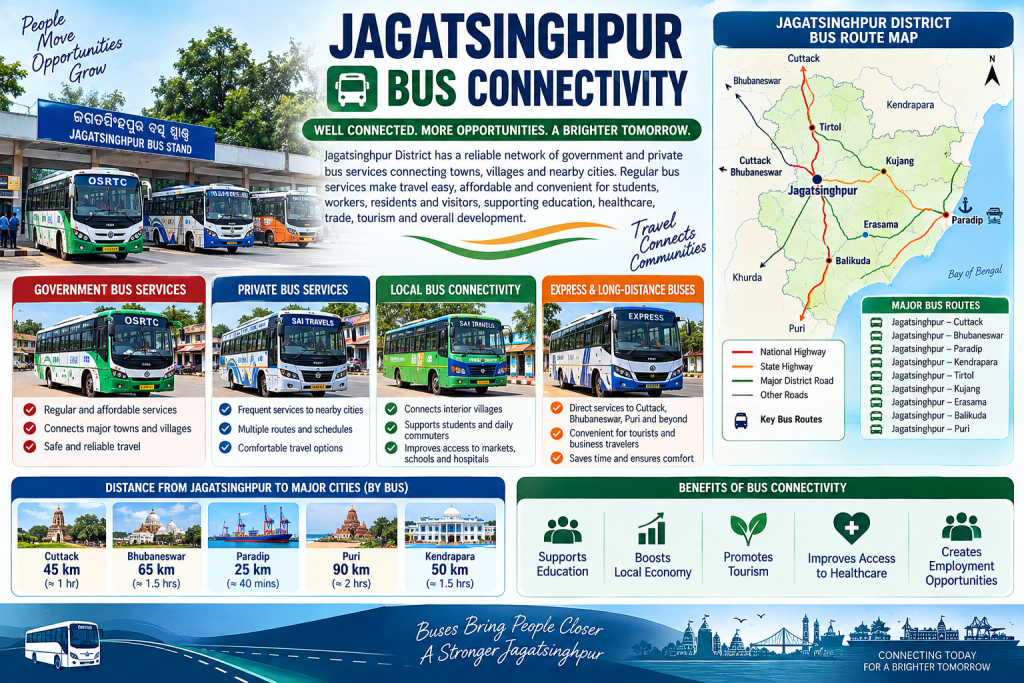
Jagatsinghpur District has a well-established network of government and private bus services that connects Jagatsinghpur town with important destinations such as Paradip, Cuttack, Bhubaneswar, Kendrapara, Tirtol, Kujang, Erasama, Balikuda, and surrounding rural areas. Regular buses operating along major highways and district roads provide an affordable and convenient mode of transportation for students, employees, traders, tourists, and daily commuters. Local bus services also connect interior villages with important towns, helping residents reach markets, educational institutions, hospitals, government offices, and commercial centres.
Bus connectivity plays an important role in the social and economic development of Jagatsinghpur District. Services towards Paradip support access to the port, industries, businesses, and employment centres, while connections towards Cuttack and Bhubaneswar provide access to major educational, healthcare, commercial, and transportation facilities. Government and private bus services together improve mobility between rural and urban areas, support tourism and local trade, and make everyday travel more accessible across the district.
Railway Connectivity
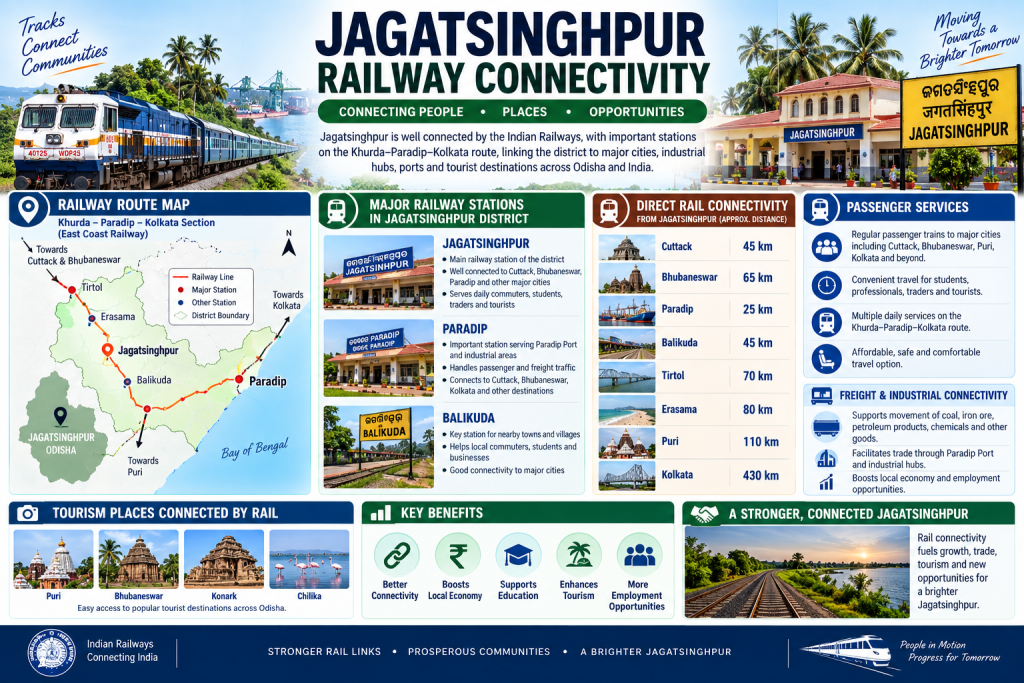
Jagatsinghpur District has useful railway connectivity that supports passenger travel as well as the movement of goods and industrial cargo. The railway network connects important areas of the district, particularly Jagatsinghpur and Paradip, with major railway junctions such as Cuttack, providing onward connections to Bhubaneswar and other destinations across Odisha and India. Railway stations and smaller stops along the network serve local residents, students, workers, traders, and visitors, offering an affordable transportation option for medium- and long-distance journeys.
Rail connectivity is especially important to the district because of Paradip Port and the surrounding industrial areas. Freight railway lines facilitate the movement of commodities and cargo between the port, industries, and other parts of the country, strengthening Jagatsinghpur’s role in Odisha’s trade and industrial economy. Together with road, bus, and port transportation, the railway network improves regional accessibility, supports commerce, employment, tourism, industry, and everyday mobility, and contributes to the overall development of Jagatsinghpur District.
Air Connectivity
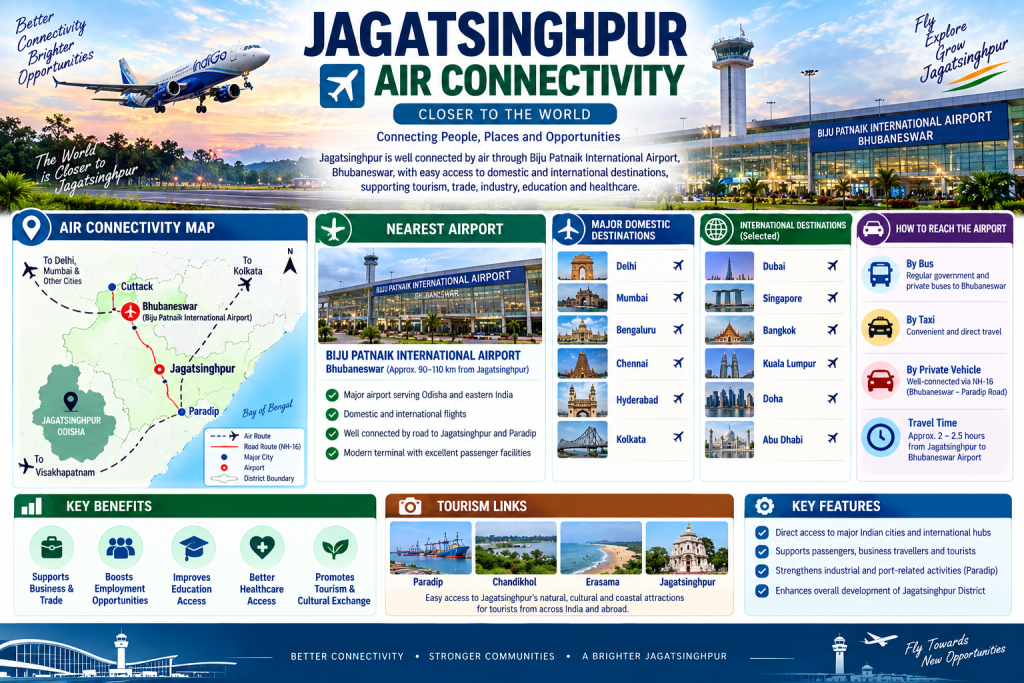
Jagatsinghpur District does not have a major commercial airport within the district, but it has convenient road connectivity to Biju Patnaik International Airport in Bhubaneswar, the nearest major airport. The airport provides domestic connections to major Indian cities and selected international destinations, making air travel accessible for residents, business travellers, tourists, and visitors travelling to Jagatsinghpur and Paradip.
Road connections between Jagatsinghpur, Paradip, and Bhubaneswar provide onward access to the airport through buses, taxis, and private vehicles. This air connectivity supports tourism, business, industry, education, healthcare, and port-related activities, while connecting the district with important destinations across India and beyond.
Water Connectivity
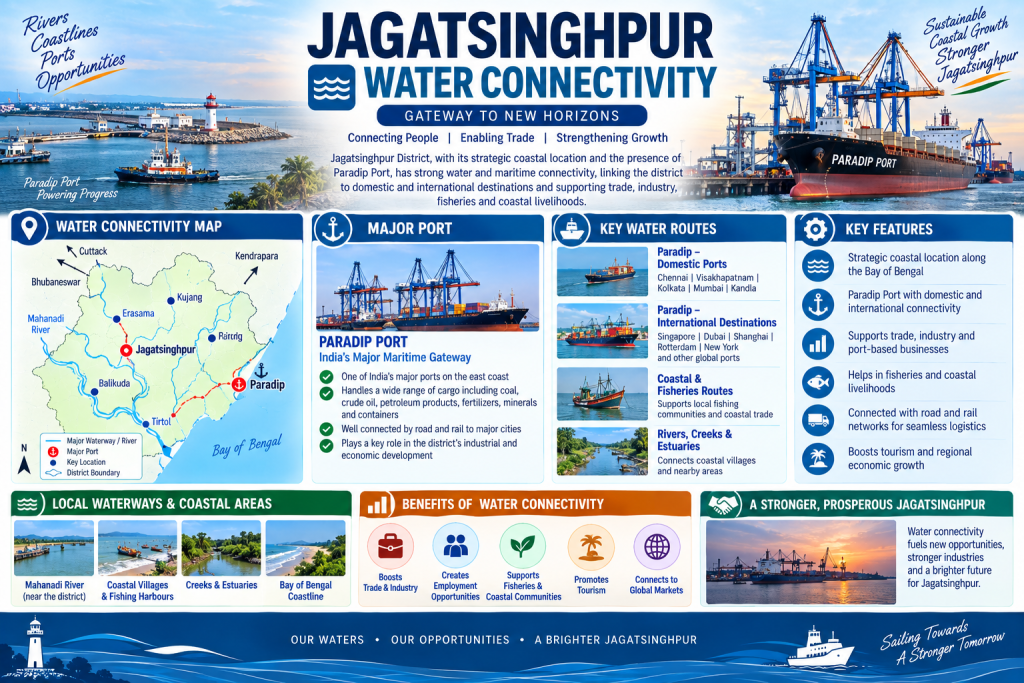
Jagatsinghpur District has significant water and maritime connectivity because of its coastal location along the Bay of Bengal and the presence of Paradip Port, one of India’s major ports. The district is also shaped by rivers, creeks, estuaries, and coastal waterways. Paradip provides an important maritime gateway for the movement of cargo, raw materials, petroleum products, minerals, and other commodities, connecting the district with domestic and international shipping routes.
Water connectivity plays a major role in Jagatsinghpur’s trade, industry, fisheries, port-based businesses, and employment. Fishing boats and smaller vessels are also important to coastal communities and support local fishing livelihoods. Together with road and rail networks, Paradip Port and the district’s waterways strengthen Jagatsinghpur’s position as an important coastal economic region of Odisha and connect local industries and communities with wider national and global markets.
Education and Healthcare
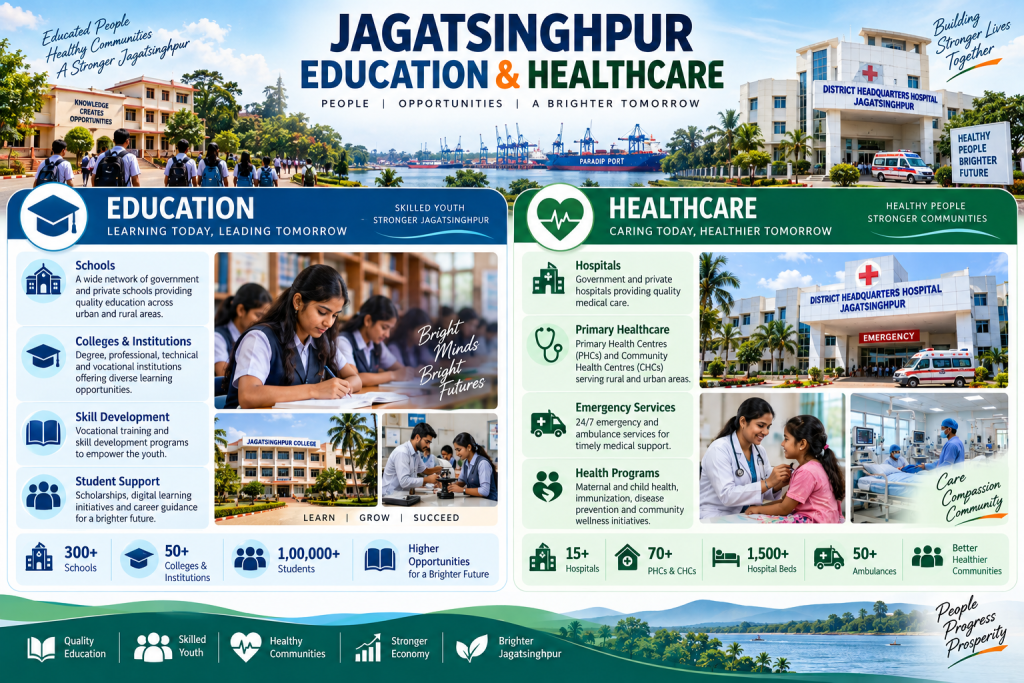
Education and healthcare play an important role in the social and economic development of Jagatsinghpur District. The district has a network of government and private schools, colleges, technical and vocational institutions, hospitals, community health centres, primary health centres, and other medical facilities serving both urban and rural communities. Continued improvements in educational infrastructure, digital learning, skill development, healthcare facilities, and trained professionals are helping create a healthier and better-educated population.
Jagatsinghpur continues to strengthen educational opportunities, public healthcare, and community welfare through government programmes and local institutions. Schools, colleges, libraries, laboratories, hospitals, emergency services, and rural healthcare facilities provide essential support to residents across the district. Together, education and healthcare contribute to skill development, employment opportunities, improved quality of life, social welfare, and the overall progress of Jagatsinghpur District.
Jagatsinghpur District
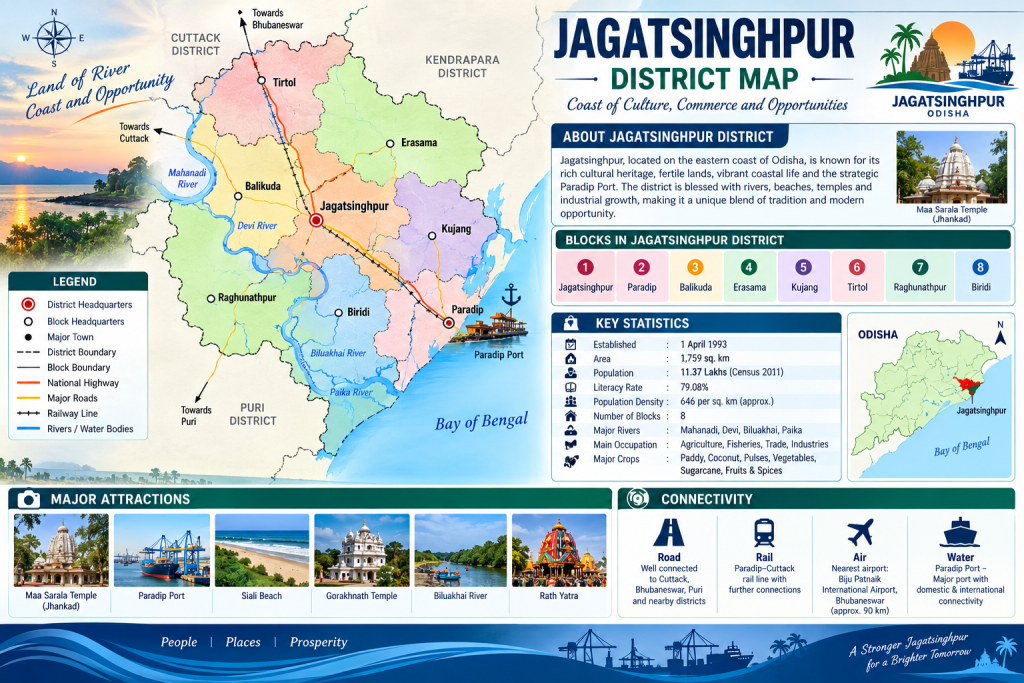
- Population: Approximately 11.37 Lakhs
- Area: Approximately 1,759 sq. km
- Literacy Rate: Approximately 79.08%
- Altitude: Approximately 6 meters above sea level
- Population Density: Approximately 646 persons per sq. km
- Major Rivers: Mahanadi River, Devi River, Alaka River, Biluakhai River, Hansua River, Paika River
- Main Occupation: Agriculture, Fisheries, Trade, Industries, and Port-related Activities
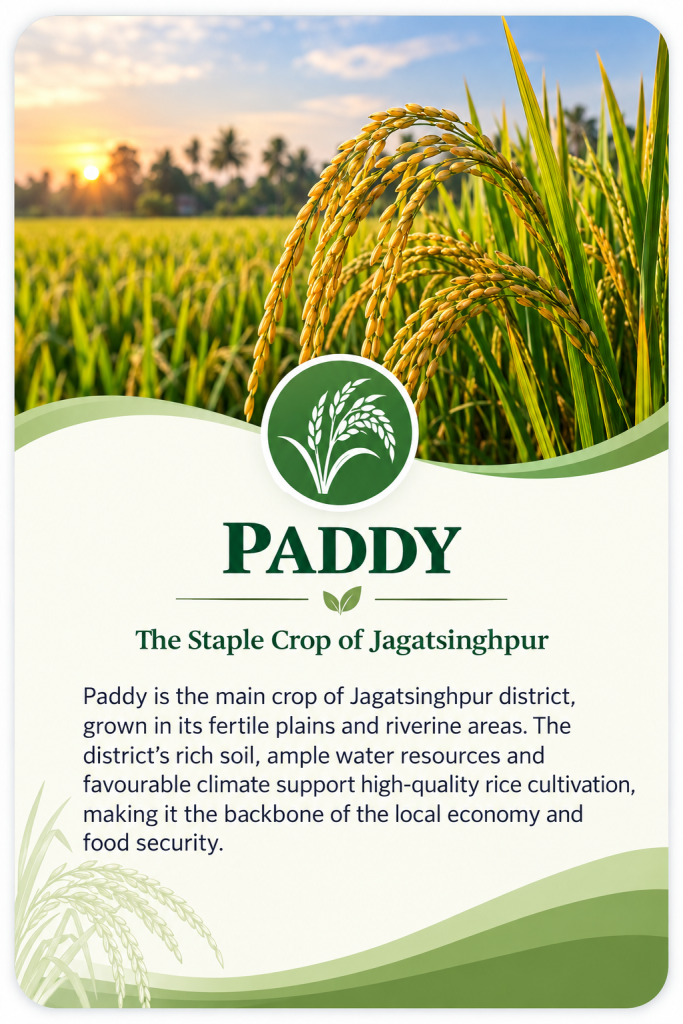
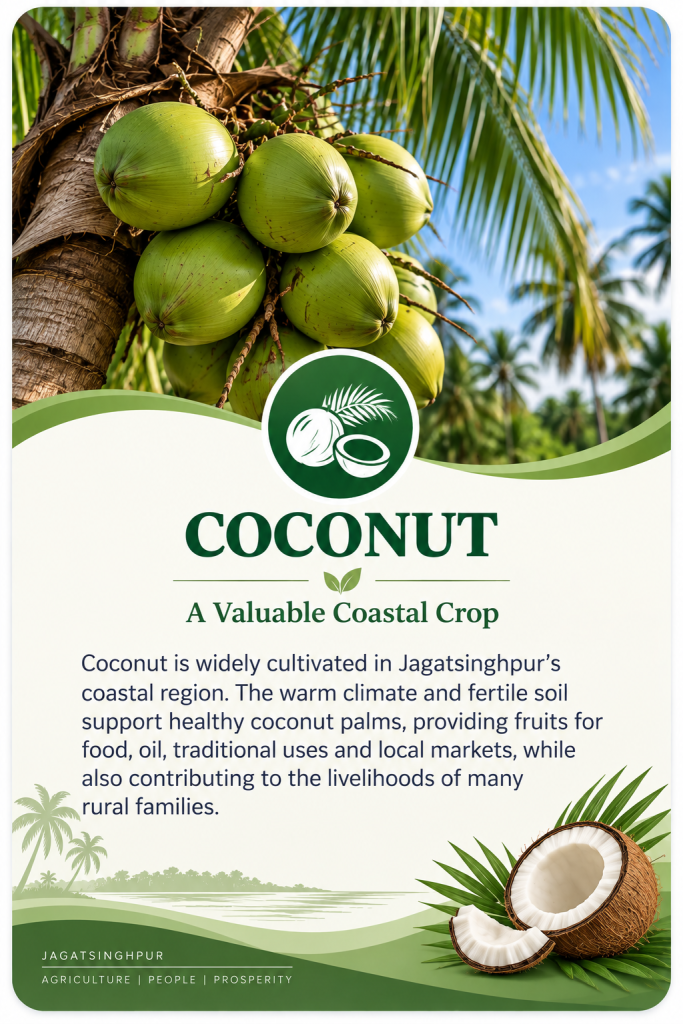
- Major Crops: Paddy, Coconut, Pulses, Vegetables, Banana, Sugarcane, Turmeric, Jute, and other horticultural crops
- Famous Tourist Places: Maa Sarala Temple (Jhankad), Paradip, Siali Beach, Gorakhnath Temple, Gada Kujanga, and other coastal and religious attractions
- Famous Festivals: Rath Yatra, Raja Parba, Makar Sankranti, Maha Shivaratri, Kartika Purnima, Boita Bandana, Kalinga Bali Yatra, Durga Puja, and Kali Puja